
Sussex County Parole and Probation
Parole normally follows confinement in the New Jersey state prison system. The New Jersey State Parole Board, or SPB, sets and enforces parole conditions after release. Probation is imposed by a court as a sentence and is administered by the New Jersey Judiciary. A person can receive probation without ever serving a state-prison term. That basic split controls where a Sussex County supervision check begins.
A person leaving Morris County Correctional Facility on a Sussex commitment is not automatically on either form of supervision. The exit may be release on a court order, a transfer to the New Jersey Department of Corrections, placement in a local alternative program, or movement under another authority. The Morris facility record and Sussex court order identify that first event. A later NJDOC out-of-custody record and SPB material can establish parole.
| Point | Parole | Probation |
|---|---|---|
| How it begins | Conditional release after prison confinement | A sentence ordered by the court |
| Supervising body | New Jersey State Parole Board | New Jersey Judiciary Adult Probation |
| Best public starting record | NJDOC custody history and SPB material | Morris/Sussex judgment or order in PROMIS/Gavel |
| Ending record | SPB discharge or other final Board record | Court or probation completion record, when disclosable |
- Parole
- Release from confinement under continued State Parole Board authority.
- Probation
- A community-based court sentence supervised by the Judiciary.
- Discharge
- The formal end of the agency's supervision or jurisdiction.
- Absconder
- A supervised person alleged to have stopped reporting or otherwise evaded supervision.
These records answer different questions. An NJDOC date shows the state custody event, not every later supervision change. A court judgment can show probation, but staff privacy rules may limit what a third party can learn about day-to-day compliance.
Verify Sussex County Post-Release Supervision
Start with the custody system that fits the case. Sussex adults are physically housed at Morris County Correctional Facility under shared services, while Sussex retains the legal commitment and local court record. If the person went from Morris custody to NJDOC, use the state path. If the court imposed probation, use the Judiciary path. An empty jail roster is not supervision evidence.
- Identify the last confirmed custodian. Compare the name, booking or SBI number, case number, and known dates. Ask whether the Morris exit was a community release or a transfer.
- Check the state custody record. Search the NJDOC Offender Search by SBI number when possible. Review Date Out-of-Custody and incarceration history.
- Use the parole channel. If the state record or release papers indicate parole, contact SPB Public Information or the Division of Release with the full name and SBI number.
- Check the court judgment for probation. Use PROMIS/Gavel and the Morris/Sussex order. The public order is stronger than an inference from a community address.
- Request an existing final record. A specific parole order, certificate, discharge, or court order is more useful than asking an agency to create a narrative.
- Reconcile conflicts. Keep each event label and date. Release from prison, the first report, a warrant, and final discharge are separate events.
The Sussex County released-inmate search paths explain how to obtain the Morris/Sussex movement record when the custody type is still unclear. That record should state whether the person left for the community, NJDOC, or another authority.
Note: A Sussex commitment can appear in a state record even when the person is housed far outside Sussex County.
Sussex County Supervision Contacts
For parole, the release papers control the reporting place. The SPB handbook says a person granted parole receives written reporting instructions before leaving custody and must report as directed. Staff review conditions at the first report, assign the officer, and set the next date. Reporting can begin weekly, biweekly, or monthly and later change. An older SPB report assigned Sussex to District Office 1, but the current office directory does not publish county assignments. Confirm before travel.
New Jersey State Parole Board
P.O. Box 862
Trenton, NJ 08625-0862
Main: 609-292-4257
Division of Release: 609-984-2190
Public information: SPB-Public-Info-Office@spb.nj.gov
For probation, Sussex is part of the Morris/Sussex Vicinage. The Probation Ombudsman can explain procedure, contacts, and reporting directions at 609-815-3810 extension 16357 or ProbationHelp.Mailbox@njcourts.gov. The Ombudsman cannot change conditions, act as a representative, or provide legal advice. A person under supervision should rely on the signed order and current instructions.
The Judiciary Adult Probation page describes the program, but it is not a public probationer-name search. Staff may be unable to confirm private compliance details to a caller.
Sussex County Supervision Violations
Parole conditions are reviewed at the first report and can include both general and case-specific requirements. Probation conditions come from the court order. A missed report or alleged violation does not itself prove a new crime. It can trigger agency review, added conditions, a warrant, detention, or a formal hearing depending on the status and facts.
SPB maintains a Fugitive Apprehension Unit and accepts anonymous absconder tips at SPB-Fugitive-Tip-Submit@spb.nj.gov. Research found no official statewide public absconder-name database. The absence of a name from a wanted page therefore proves little. Sussex Sheriff news and wanted posts are selective and are not substitutes for SPB or court records.
Parole violations can lead to a warrant, detention, probable-cause or revocation proceedings, revocation with a new eligibility term, or continued release with conditions. Before a scheduled parole release, new adverse information can also lead to a rescission hearing. Each term marks a process step, not a final result. Verify the later Board action.
Note: A parole warrant reflects alleged noncompliance and possible return to custody; it is not, by itself, a new conviction.
Sussex County Supervision Discharge
Physical release and discharge are not the same. NJDOC's Date Out-of-Custody can mark the end of the prison custody period while State Parole Board authority continues. NERA can require a later period of post-incarceration parole supervision for covered sentences. Other parole terms follow their own orders and statutes. The final parole certificate, order, or discharge record is the sound document for the end of Board supervision.
For probation, use the court and Judiciary record that reflects completion or other disposition. A docket entry should be read with the judgment and later orders. Do not treat a lack of public staff confirmation as proof that supervision ended. Records may also be withheld or redacted when confidentiality rules apply.
An identifiable record request is more effective than a broad question. For SPB, supply the person's full name, SBI number when known, and the kind of final record sought. For court records, use Judiciary procedures rather than OPRA because OPRA does not govern the courts. Sealed, expunged, and juvenile information has added limits.
Sussex County Release Reentry Planning
Because Sussex adults are housed at Morris County Correctional Facility, the Morris Reentry Program is the local bridge available before release. The official program page describes one-on-one planning during confinement, an individualized transition team, document and identification preparation, service coordination, and continued case management after release. These services are distinct from parole or probation supervision.
A Sussex person at MCCF can ask about planning before the custody record changes. The county lists coordinator Antonella McGee at 973-631-5036. Reentry staff can help arrange documents and services, while the parole officer or probation officer remains the authority for formal conditions and reporting. Keeping those roles separate prevents a helpful program contact from being mistaken for the supervising office.
The two-county arrangement matters after release as well. The person may leave the physical facility in Morristown, then report or obtain records through agencies tied to Sussex, the Morris/Sussex Vicinage, or SPB. Written release instructions should guide the first trip.
Reentry planning also helps keep proof in order. Release papers, identification, court orders, and agency contact notes should be kept as separate records because each supports a different part of the Sussex County supervision timeline.
Sussex County Release Property and ID
MCCF's general information says accumulated property can be sent out at the inmate's expense or picked up by a friend or relative, by request, on a scheduled visiting day. That is a during-custody option. No official post-release walk-up property procedure was found, so a person should contact MCCF rather than assume items remain available at an exit desk.
Identification can be just as urgent. Morris reentry staff describe help compiling needed documents and ID before release. That work can support the first supervision report, but it does not alter the reporting deadline or replace the release papers. A person who lacks ID should contact the assigned office promptly and follow its directions.
Property, ID, and supervision each create a separate record trail. A property pickup does not prove discharge. Reentry enrollment does not prove parole. The SPB or court record remains the source for Sussex County supervision status.
Note: No verified post-release property window exists in the research, so call the Morris facility before planning a pickup.
The State Parole Board contact page shows the official verification channels.
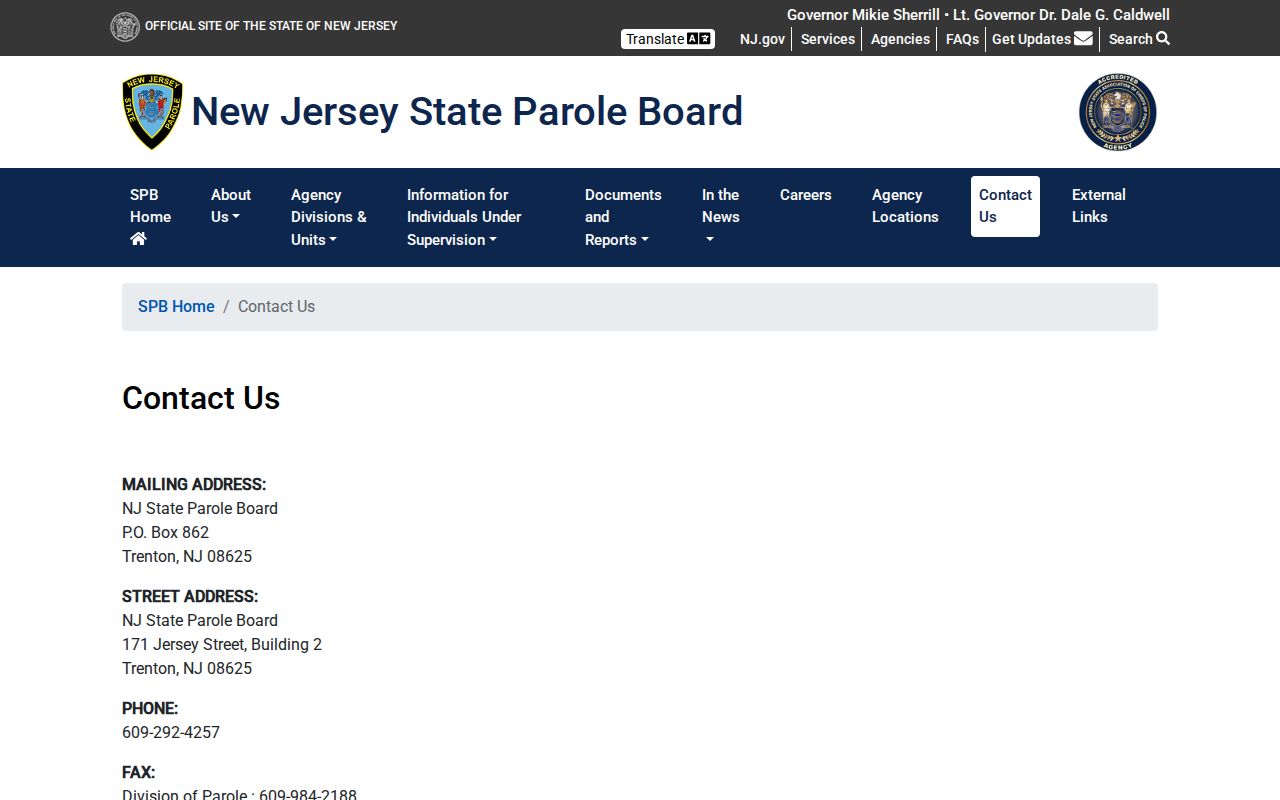
The official contact screen is the safer source for current phone and public-information routes than an old county assignment list.