
Keogh-Dwyer Release Destinations
Keogh-Dwyer Correctional Facility is not the usual gate from which a Sussex County adult now leaves custody. Under the shared-services arrangement adopted in fall 2019, all Sussex inmates are housed at Morris County Correctional Facility in Morristown. Keogh-Dwyer remains the Sussex Bureau of Corrections command and transport base. Sussex staff retain duties tied to people committed on Sussex matters, including transport for admission, court hearings, and medical appointments. Morris County supplies the physical bed and handles the housing operation.
A person who leaves Morris housing may enter the community, but that is only one possible path. The person may transfer to the New Jersey Department of Corrections after a state sentence, move to another county, or pass into federal or immigration custody. A Keogh-Dwyer movement record should state the recorded disposition or destination. The Morris release or movement record helps establish the physical exit. Read them together before describing the event.
Confirm Keogh-Dwyer Release Status
The strongest check follows the custody chain instead of relying on one live search. New Jersey VINE can provide a timely status or custody-change notice when the correct reporting agency participates. Yet VINE is not a permanent release archive. The maintained Sussex and Morris records are needed for a past event or a precise disposition.
- Identify the full name, the Sussex case or complaint number, the approximate booking date, and any SBI or booking identifier.
- Call MCCF Records and ask whether the person is physically housed. If not, ask whether the maintained record identifies a release or transfer.
- Check New Jersey VINE by name or ID and verify that the reporting agency matches MCCF or the next custodian.
- Review the Morris/Sussex court case for the order or disposition that may explain why the county hold ended.
- Request the Sussex commitment and movement record, then seek the parallel MCCF admission and release record from Morris County.
- If either record names NJDOC, BOP, USMS, or ICE, continue with that system’s official channel.
The broader Sussex County released inmate search explains how to reconcile VINE, court, county, state, and federal results for one named person. A verbal statement that someone is “not here” should not be converted into a release date.
Keogh-Dwyer Release Records
Sussex records requests should ask for existing, identifiable documents. Useful items include the commitment or admission record, movement entry, release or discharge record with date and time, release type, transfer destination, and booking photograph where disclosable. Because Morris County physically houses Sussex inmates, a parallel request should ask which MCCF booking, movement, and release records Morris maintains.
39 High Street
Newton, NJ 07860
Phone: 973-579-0850
Fax: 973-579-7884
OPRA: OPRA@sussexcountysheriff.com
The current Sussex Sheriff OPRA form supports email, fax, mail, pickup, and onsite inspection. Standard paper rates listed on the form are five cents per letter-size page and seven cents per legal-size page, with actual costs for other media. Ask for electronic copies when practical and request redaction of exempt parts instead of denial of the whole record.
Note: Juvenile, sealed, expunged, investigative, privacy, safety, or security material may be withheld or redacted under controlling law.
Keogh-Dwyer Custody Role
The Sussex Bureau of Corrections operates from Keogh-Dwyer at 41 High Street in Newton. The building sits behind the Sussex Judicial Center and beside the parking garage. Its present role is mainly administrative for adult detention. A person committed by a Sussex court can still have Sussex transport, command, and records activity even though the person sleeps in a Morris County cell.
The official Keogh-Dwyer correctional facility page shows the Sussex office readers may encounter when tracing the local side of a release record.
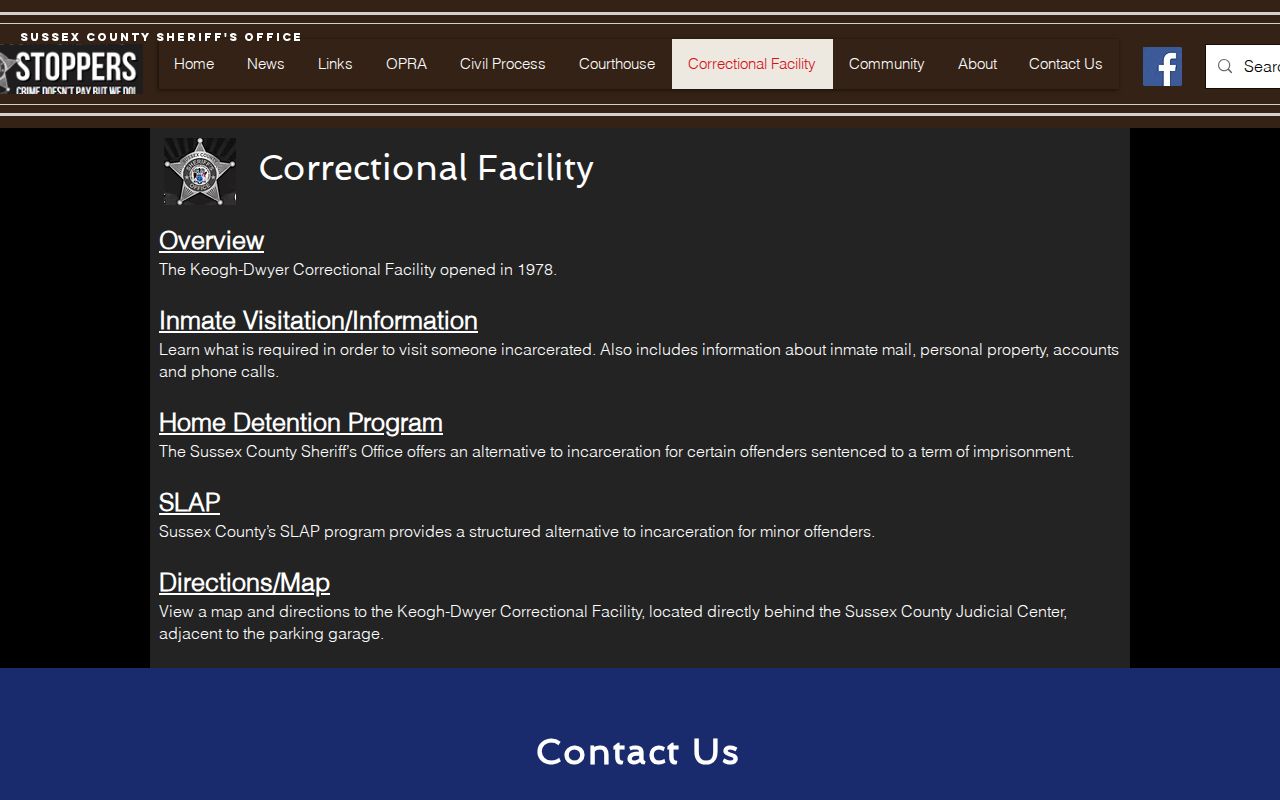
The image supports the administrative contact route, while the shared-housing record explains why the physical custody check belongs with MCCF.
This split affects every release inquiry. The Sussex court order can show the legal reason a hold ended. The Sussex Sheriff may document the commitment or transport. MCCF holds the physical housing and exit record. None of those records should be forced to answer a question outside its function. The court order may authorize release but not show the door time. A VINE alert may be fast but may not state the final destination. The movement record is the better source for that distinction.
- Release
- An end to one agency’s custody, which may lead to the community or another custodian.
- Transfer
- A move from one facility or authority to another without a community release.
- Detainer
- A request or legal hold that may require another agency to assume custody.
- Discharge
- An official end to a custody or supervision term as recorded by the responsible agency.
Keogh-Dwyer Court Release Records
Sussex County Judicial Center is next to the corrections base, but court and corrections records follow different access rules. PROMIS/Gavel may show a dismissal, pretrial order, plea, judgment, probation sentence, or time-served disposition. Those entries explain legal authority. They usually do not show when MCCF staff finished the release process or whether another hold delayed departure.
For a durable court record, use the New Jersey Judiciary channel rather than county OPRA. The Sussex Criminal Records Room is at 43-47 High Street in Newton and can be reached at 973-579-0933. Match the defendant, case number, charge, and disposition. Then compare the court entry with the MCCF movement timestamp and Sussex transport record. A dismissal on one case does not cancel an unrelated detainer.
Note: Court authorization, jail processing, and a VINE notification can bear different times without any of the records being wrong.
Keogh-Dwyer Transfer Checks
If the movement record says “transferred to NJDOC,” search the NJDOC Offender Search by SBI number when known. Compare the name, aliases, county of commitment, admission date, and current facility. “County of Commitment: Sussex” refers to the case venue, not a prison in Sussex. For a past state term, Date Out-of-Custody and incarceration history are stronger evidence than an empty facility field.
Federal paths differ. BOP covers sentenced federal custody from 1982 forward. USMS has no public person locator for federal pretrial custody, so the federal docket, holding facility, and responsible district are the practical route. ICE ODLS covers current detainees and some people released from ICE custody within the prior sixty days. A handoff from MCCF to any of these systems is a county exit, but not a community release.
After Keogh-Dwyer Release
A community release can still carry court or agency duties. Probation is a court sentence served under Judiciary supervision. Parole usually follows a state prison term and continues under the New Jersey State Parole Board. Home Detention and the Sheriff’s Labor Assistance Program are alternatives to incarceration, not proof that a sentence has been fully discharged.
For a person housed at MCCF, the Morris Reentry Program may begin planning before release and continue case management afterward. Its county description includes individualized transition planning, document and identification help, service coordination, and continued contact. Those services do not establish release status, but they can help the person prepare for the move from custody. The release papers and agency records still control the official date, disposition, and reporting instructions.
Property questions should also go to the physical housing facility. MCCF says accumulated property may be mailed out at the inmate’s expense or picked up by a friend or relative, by request, on a scheduled visiting day. That is a during-custody option, not a published post-release pickup rule. No official Sussex or Morris source found a standard release door, waiting area, weekend routine, or discharge ride. For an authorized pickup, call MCCF staff for the current instructions instead of relying on the old Keogh-Dwyer address or an assumed release hour.